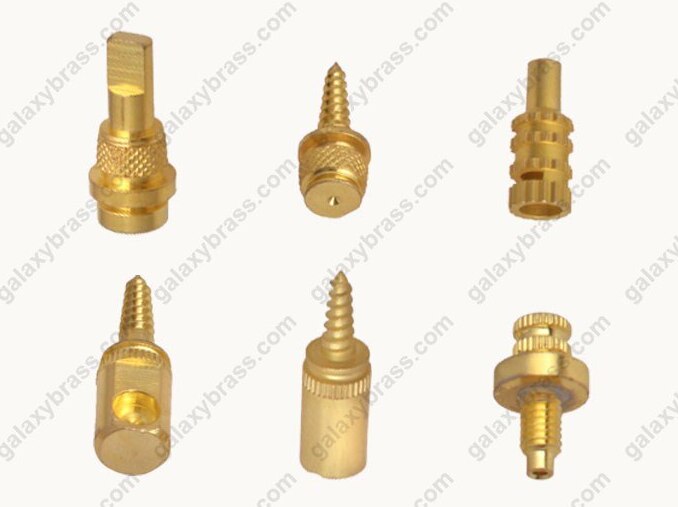
The answer depends less on the quoted price than on annual volume, drawing stability, material restrictions, inspection burden and delivered cost. By comparing machining routes, brass grades, documentation and logistics, you can decide when Jamnagar offers a sound sourcing advantage and when another supplier is safer.
Key takeaways
- Order from Jamnagar when repeat volume offsets setup, tooling and freight costs.
- Match Swiss, CNC or screw-machine turning to geometry, tolerance and annual volume.
- Specify brass grade, plating, tolerances, inspection criteria and revision-controlled drawings.
- Qualify suppliers through samples, process capability evidence, traceability and delivery performance.
When does Jamnagar beat another manufacturing centre or an overseas supplier?
Piece price is only the starting point. Precision turned auto components from Jamnagar become commercially worthwhile when the part has repeat demand, a stable drawing, predictable annual volume and enough shipment value to spread tooling, setup and freight across many pieces.
| Source | Commercial advantage | Where the advantage weakens |
|---|---|---|
| Jamnagar brass cluster | Specialised turning capacity, repeat production and consolidated export shipments | Prototypes, tiny one-off lots, difficult low-lead machining or complex assembly |
| Other Indian centre | Potentially shorter domestic logistics or stronger capability for a different process | Less concentrated brass-turning expertise can increase coordination and process-development effort |
| Overseas supplier | Existing approval, local inventory or highly automated production for very large volumes | Ocean or air freight, import duty, customs delay, currency exposure and larger minimum orders |
Request a delivered-cost comparison that separates tooling, setup, secondary operations, inspection, sorting, plating, packaging, freight, duty and inventory carrying cost. Drilling, tapping, broaching, deburring, cleaning and 100% sorting can cost more than the turning operation itself, especially when burr limits or a functional plated surface are tight.
Jamnagar is the weaker choice while the design keeps changing or the order cannot amortise tooling. It is stronger for a repeatable family of brass parts with manageable tolerances, common stock and documented process capability.
Confirm the exact alloy and compliance position: a RoHS statement does not prove REACH compliance, particularly where leaded brass, plating, lubricants or sealants are involved.
Which turning process fits the part, volume and geometry?
A low piece price can conceal the wrong production route. Match the machine to annual volume, geometry and change frequency, then ask the RFQ to show setup cost, tooling amortisation, cycle time and inspection cost.
| Process | Cost and flexibility | Best fit for brass auto parts | Repeatability risk |
|---|---|---|---|
| CNC turning | Highest flexibility; economical for low to medium volumes and frequent drawing changes | Complex profiles, larger diameters, short runs, and parts needing live-tool drilling or milling | Low when datums, tool wear limits and in-process checks are defined |
| Swiss-type turning | Higher programming and setup effort, with efficient cycle times | Slender, small-diameter parts with close concentricity requirements, such as sensor bodies and inserts | Excellent for supported bar stock; unsuitable geometry can add unnecessary cost |
| Automatic screw machining | Low unit cost after tooling, but less flexible when the design changes | High-volume, repetitive bushings, spacers, threaded adaptors and simple valve parts | Strong across stable production, but tooling wear and adjustment records matter |
| Secondary operations | Can exceed turning cost and create the largest variation | Cross-holes, tapping, broaching, deburring, cleaning, plating, heat treatment and 100% sorting | Depends on dedicated fixtures, gauges and defined acceptance limits |
For high-volume, simple parts, automatic screw machining, cold heading or forging may beat CNC turning through shorter cycles and lower material waste. CNC turning fits unstable demand or complex features better. Swiss turning earns its premium when slender geometry would deflect on a conventional lathe.
Request separate prices for every secondary operation. Tight burr limits, cosmetic plating and functional surface thickness can make precision turned brass components expensive after machining, even when the turning quote looks competitive.
Which brass grade and surface treatment match the service environment?
Road salt, coolant, fuel, vibration and electrical current demand different choices. Do not accept “brass” on the quotation: specify the exact alloy, temper or condition, and obtain a mill certificate or agreed material test report for each lot.
| Option | Best fit | Main limitation |
|---|---|---|
| C36000 / CW614N (CuZn39Pb3) | Fast turning, clean threads, bushings and precision brass auto parts where lead is permitted | Lead content can conflict with customer, vehicle or export restrictions |
| DZR brass | Pressure-retaining fittings exposed to water or conditions where dezincification threatens thread strength and dimensional stability | Costs more and still requires corrosion validation |
| Lead-free brass | RoHS-sensitive electrical parts and programmes that prohibit intentional lead | Tool wear, chip control, conductivity and thread performance need confirmation |
| Copper-rich brass | Low contact resistance and electrical conductivity | Lower machining efficiency or reduced strength can affect pressure and wear performance |
Choose nickel plating for harder wear and corrosion protection, or tin plating where an electrical contact needs solderability and stable contact resistance. Design plating into the drawing: state the coating system, thickness range, adhesion test, salt-spray method, masking zones and surfaces that must remain bare.
Plating buildup can seize threads, alter mating diameters and increase resistance when coverage is uneven.
Ask whether lead-containing alloy, plating, lubricant or sealant creates a REACH obligation; a RoHS declaration alone does not prove REACH compliance. Specify functional tolerances, runout, thread class, roughness, burr and cleanliness limits rather than applying one general tolerance to every feature. Verify performance at the actual temperature and pressure, not only room-temperature dimensions.
What must your drawing and approval package specify before production?
Release a large order only after the approval package defines how every critical feature will be measured and accepted. “Precision” is not a tolerance.
1. Issue a signed drawing with material grade, datum structure, critical diameters, lengths, threads and thread class, runout or concentricity, surface roughness, burr limits, plating thickness, masking areas and cleanliness limits. Do not apply a general tolerance table to functional features that need tighter control.
2. Name the inspection method beside each critical characteristic: calibrated plug and ring gauges for threads, air gauging for repeatable diameters, optical measurement for profiles, and CMM measurement for datum relationships. State the gauge identification, calibration status and acceptance limits.
3. Attach an approved material sample and define the plating system, thickness range, adhesion requirement and corrosion or salt-spray test method. This prevents coating buildup from changing a thread or mating diameter.
4. Require a trial package containing first-article inspection results, representative production samples, agreed visual and functional standards, and a signed control plan. For custom turned brass components, include checks for burrs in passages, damaged threads, cleaning and mixed-lot risk.
5. Request the automotive quality records that apply: process flow, APQP records, PPAP submission, measurement-system analysis, capability studies, material and plating certificates, lot traceability, nonconformance records and formal change-notification rules. Supplier-reported “inspection passed” is not an acceptance criterion.
The quotation should identify drilling, cross-holing, tapping, deburring, cleaning, plating and 100% sorting separately; secondary operations can cost more than turning.
How should you qualify a Jamnagar supplier before placing the order?
A supplier is a go only after it proves the part, process and paperwork on a small controlled order. Treat a brass turned parts manufacturer’s piece price as unverified until inspection, compliance and delivery risks are measured.
1. Issue a signed drawing, control plan and acceptance criteria, then place a trial order. Require the exact alloy and condition, approved material sample, mill certificate or agreed material test report, representative production samples and first-article inspection. Define how critical features will be measured: calibrated plug and ring gauges, air gauging, optical measurement or CMM.
2. Request PPAP evidence matched to the part, not a generic quality brochure. Check the process flow, control plan, dimensional results, measurement-system analysis, capability studies for critical diameters and threads, and formal change-notification procedure. ISO 9001 does not equal IATF 16949 or approval of your specific process.
3. Test traceability from finished box back to raw-material heat or batch, machine, inspection record and shipment date. Reject a system that cannot isolate suspect lots during a field complaint.
4. Obtain signed RoHS and REACH declarations covering the alloy, plating, lubricant, sealant and surface-treatment chemicals. A RoHS statement alone does not settle REACH obligations, especially with lead-containing C36000 or CW614N.
5. Price the logistics risk: agreed Incoterms, packaging, dispatch frequency, transit route, buffer stock, export documents and a recovery plan for delays. Galaxy Metals should answer these questions with records, not assurances.
Approve the supplier only when the trial passes every criterion and the delivered-cost model includes sorting, inspection, tooling, freight, import charges and inventory.
Related products
 | brass components, Brass parts, brass products, Brass CNC Parts, Brass Electrical Parts ₹1000 We are manufacturer exporter of brass components, Brass parts, brass products, brass lighting parts, Brass CNC Parts, Brass Screw, Brass Nut, Brass... View product → |
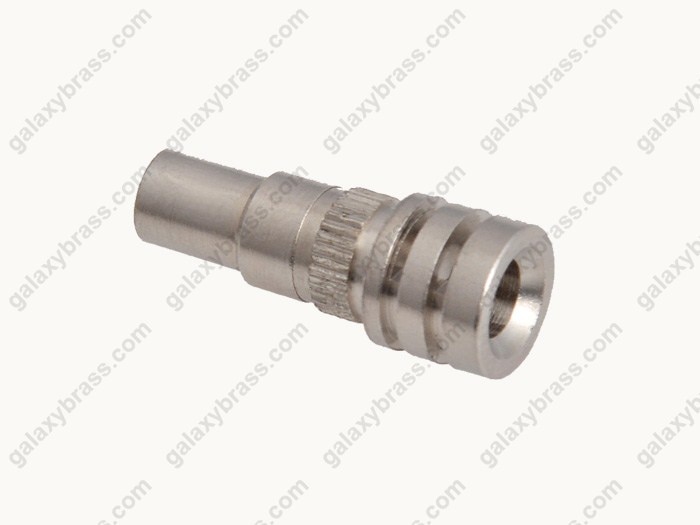 | Automobile Valve Components Precision Turned Auto Components Temperature sensors Brass Components Brass Inserts for Auto Plastics components Auto Meters Brass Components... View product → |
Frequently asked questions
When does Jamnagar beat another manufacturing centre or an overseas supplier?
Jamnagar becomes commercially attractive when repeat demand, a stable drawing, predictable annual volume and shipment value spread setup, tooling and freight costs across many pieces.
Which turning process fits the part, volume and geometry?
Choose Swiss-type turning for slender, tight-tolerance parts; CNC turning for flexible production and complex geometry; and automatic screw machines for high-volume, repeatable components.
Which brass grade and surface treatment match the service environment?
Select the brass grade for strength, machinability, conductivity and regulatory needs, then specify plating or other treatment for corrosion, wear, electrical contact or appearance requirements.
What must your drawing and approval package specify before production?
Include material grade, dimensions, tolerances, threads, surface finish, treatment, inspection points, revision status, packaging and approval requirements.
How should you qualify a Jamnagar supplier before placing the order?
Review relevant samples, machine capability, inspection equipment, process-control records, material traceability, corrective-action procedures and delivery history before approving production.
Related products
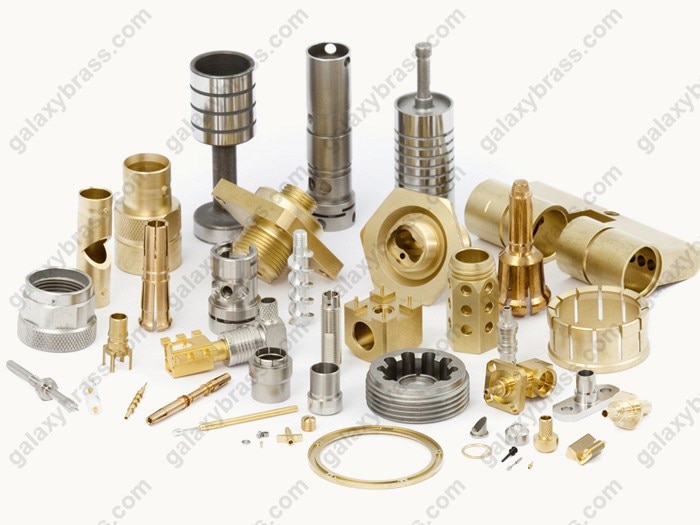 | We are highly reputed manufacturers and suppliers of Precision Components. View product → |
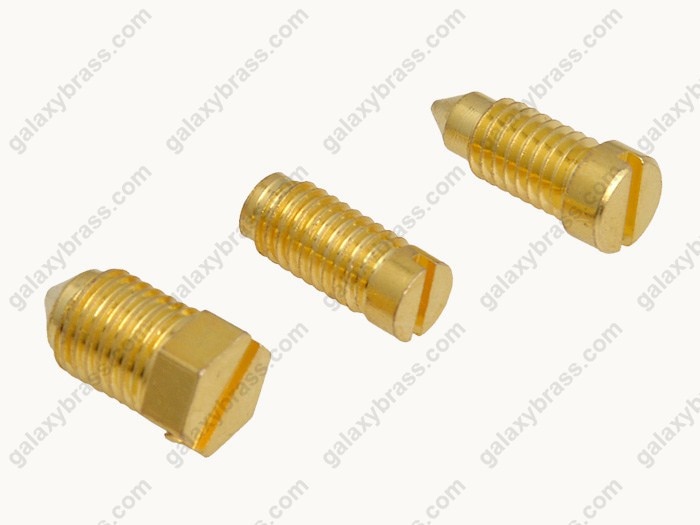 | Brass Hex Screw & Lock Screw We manufacture Brass Screw in various sizes & dimensions like: brass Screw, brass grub Screw, M4 brass Screw, brass Hex Screw, brass Screw... View product → |
Keywords