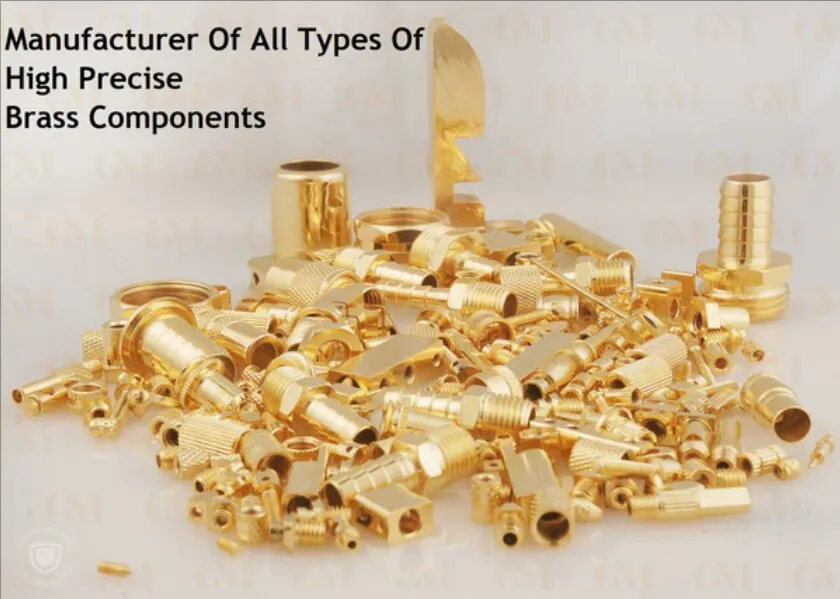
Fast sourcing depends less on finding the lowest unit price than on sending a quote-ready specification to the right production route. You will be able to separate machining, forming and material decisions, verify electrical fit, and compare Jamnagar suppliers against traders or overseas sources without losing time to avoidable clarification cycles.
Key takeaways
- Separate raw-material supply from machining and finishing before requesting prices.
- Send drawings with tolerances, thread details, alloy and surface-finish requirements.
- Check mechanical fit, conductivity and current-carrying performance as one approval.
- Ask for tooling, inspection and delivery evidence before approving a supplier.
Build a Short Supplier List Before You Request Prices
Separate material supply from part manufacture before you seek prices. For brass parts for electrical manufacturers in Jamnagar, the quickest route is often an approved stockist for brass rod, tube or strip plus a local process supplier for machining, heading, stamping or assembly. One vendor handling special material, tooling and plating can add approval delays.
- Classify the part by its likely route: bar-turned for a prototype bush or contact, cold-headed for a high-volume terminal or fastener, stamped for thin sheet parts, and forged or die-cast for heavier shapes.
- Shortlist three suppliers that already run that process, then ask whether they hold the required alloy and stock form. A CNC supplier starting from available bar can beat a trader who must import a finished component.
- Send each supplier the part number, drawing or CAD file, alloy, quantity, batch size, tolerances, thread standard, finish, burr limit and packing requirement. “Brass CNC component” is not enough to compare offers.
- Ask for the manufacturing route, sample lead time, production lead time and tooling charge separately. Request a material certificate showing the heat or cast number and chemical composition; specify EN 10204 Type 3.1 when your export customer requires product-linked results.
Reject any quote that offers only a generic brass declaration or no firm answer on stock, tooling and first-article timing.
Match the Part to the Manufacturing Process
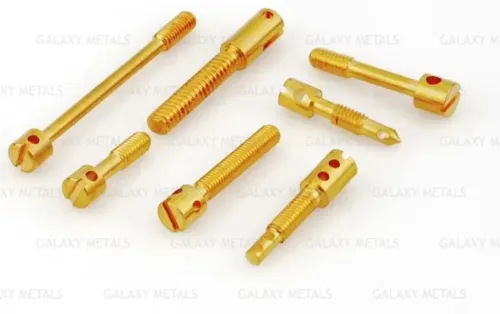
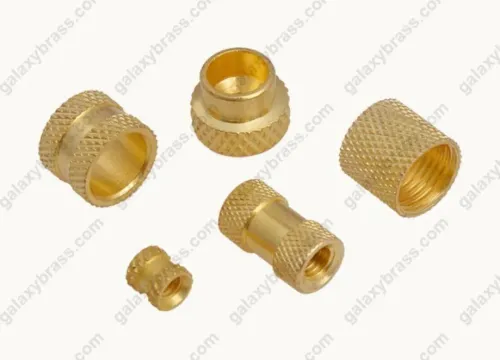
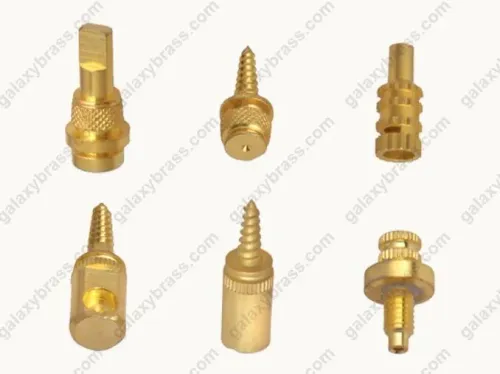
A terminal, contact, insert, bush, fastener or meter component needs a process matched to its geometry and quantity. “Brass CNC component” is not enough: a bar-turned prototype and a cold-headed production fastener have different tooling, lead times and piece costs.
| Process | Best fit | Main trade-off |
|---|---|---|
| CNC turning | Threaded terminals, bushes, inserts, meter stems and small round fasteners | Starts quickly from brass bar, but piece cost rises at high volume |
| Cold heading | High-volume screws, rivets, pins and simple terminals | Low unit cost after heading dies and qualified wire are ready |
| Stamping or pressing | Flat contacts, cable terminals, washers and spring parts from strip | Fast at volume, but poor fit for deep 3D features |
| Forging | Strong terminals, lugs and connectors needing dense grain structure | Handles high loads, but requires dies and secondary machining |
| Milling or sheet cutting | Meter brackets, irregular plates and low-volume profiles | Flexible for short runs, with more waste than stamping |
For brass CNC parts in Jamnagar, ask the supplier to name the route, stock form and expected batch size before comparing prices. Use CNC turning for samples or complex threaded parts; move to heading, stamping or forging when repeat volume justifies tooling. Separate material sourcing from processing when one vendor’s combined schedule would delay approval.
Send a Quote-Ready Drawing and Specification
An accurate RFQ gives the supplier enough detail to price the actual part, tooling, inspection and delivery—not an assumption about “brass components in Jamnagar.”
1. State the part number, revision, annual demand, batch size, target delivery date and whether the requirement is prototype, trial lot or repeat production.
2. Attach a controlled 2D drawing and, where useful, a 3D CAD file. Mark finished dimensions, datums, critical tolerances, thread standard and pitch, hole or shaft fits, burr limits, surface roughness, plating, heat treatment and packing method.
3. Name the exact material designation and standard, such as UNS C36000 to ASTM B16/B16M or CW614N to EN 12164. Include temper or stock form; “free-cutting brass” alone permits competing interpretations.
4. Define inspection requirements: sampling plan, measuring equipment, functional gauges, dimensional report and required certificates. For export electrical assemblies, request an EN 10204 Type 3.1 certificate showing the actual heat or cast number and chemical composition.
5. Identify the required process if it affects price, such as CNC turning, milling, forging, stamping or blanking. Ask each vendor to state tooling ownership, minimum order quantity, plating subcontractor, first-article timing and delivery terms. Send this identical RFQ to every capable supplier so their replies—not the lowest headline price—can be compared.
Check Mechanical Fit and Electrical Performance Together
Do not approve a brass component from a certificate of conformance or a visual sample alone. Prove fit with the mating parts, then prove electrical performance under the assembly’s actual clamping, crimping or contact conditions.
For brass parts for electrical manufacturers in jamnagar, build a first-article check around these records and tests:
- Match every critical drawing dimension to an inspection result using a ballooned drawing. Record thread pitch with GO/NO-GO gauges, bore and shaft sizes with calibrated gauges, and the mating-part dimensions.
- Assemble the part with production hardware. Check thread engagement, insertion force, contact geometry, insulation clearance, shoulder seating and movement under the specified torque.
- Measure crimp height, pull-out force and conductor retention when the part is a crimp terminal. A terminal that fits the housing can still fail during crimping.
- Measure contact resistance after assembly, then repeat after the specified current, temperature and mating-cycle test. Low resistance before testing proves little.
- Name the applicable product standard for the terminal, connector or terminal block; “electrical-grade brass” is not a functional qualification.
- Request an EN 10204 type 3.1 material certificate showing the actual product’s heat or cast number and chemical composition. Check the alloy against lead limits, welding, brazing and contact requirements.
Reject the lot when a critical feature lacks a gauge result, the material traceability stops at a supplier declaration, or the assembled part passes dimensions but fails resistance, crimp or retention testing.
Resolve Alloy, Compliance and Inspection Requirements Early
A request for brass cnc parts in jamnagar is not approval-ready until the drawing names the alloy, governing product standard and permitted substitutions. CW614N and C36000 are machining references, not automatic equivalents; their chemical limits and certification conventions can differ.
For terminals and connectors, select the alloy against crimp performance, contact resistance, brazing or welding, and lead restrictions—not machining speed alone.
| Alloy choice | Benefit | Approval risk |
|---|---|---|
| C36000 or CW614N | Fast, clean machining | Chemical limits and governing standards must match the order |
| Leaded free-machining brass | Shorter cycle time | Lead content can conflict with RoHS scope or terminal qualification |
| Specified low-lead alloy | Easier environmental approval | Confirm machinability and electrical performance by test |
- Request an EN 10204 type 3.1 certificate showing the actual heat or cast number and chemical composition; reject a generic supplier declaration.
- State the applicable requirement, such as IEC 61238-1 for compression connectors, IEC 61210 for quick-connect devices, or IEC 60947-7-1 for terminal blocks.
- Define dimensional inspection, thread gauges, plating thickness, burr limit, torque or crimp-force testing, contact-resistance testing and sample size.
- Check RoHS Annex III exemption 6(c) against the actual product category and application; leaded brass is not automatically compliant because an exemption exists.
Compare Capacity, Tooling and Delivery Evidence
A low quote proves little; a quick supplier provides dated evidence for material, tooling, inspection and dispatch. Send the same controlled RFQ to each process-capable vendor, then compare the response rather than the headline unit price.
For brass components in Jamnagar, ask whether standard rod, tube or strip can be bought separately while the process supplier makes the parts.
| Check | Fast-start evidence | Price-only warning |
|---|---|---|
| Tooling | Existing tool, ownership stated, and tool trial date | “Tooling included” with no owner or completion date |
| Capacity | Machine or press route, monthly capacity, batch size and confirmed slot | Capacity described only as “ample” |
| Approval | First-article date, inspection plan and sample quantity | No first-article commitment |
| Material | Alloy, heat or cast number, chemical report and EN 10204 type 3.1 certificate | Supplier declaration without test results |
| Finishing | Plating subcontractor named, process and turnaround stated | “Plating available” with no route |
| Delivery | Ex-works or delivered terms, packed quantity and dispatch date | An attractive lead time with no delivery basis |
Ask Galaxy Metals, or any shortlisted manufacturer, to identify the manufacturing route and state minimum order quantity. A CNC-turned sample may start sooner, while a cold-headed terminal needs qualified heading wire and tooling; the cheaper route can therefore take longer to approve. Judge speed by documents, dates and commitments.
Related products
 | brass components, Brass parts, brass products, Brass CNC Parts, Brass Electrical Parts ₹1000 We are manufacturer exporter of brass components, Brass parts, brass products, brass lighting parts, Brass CNC Parts, Brass Screw, Brass Nut, Brass... View product → |
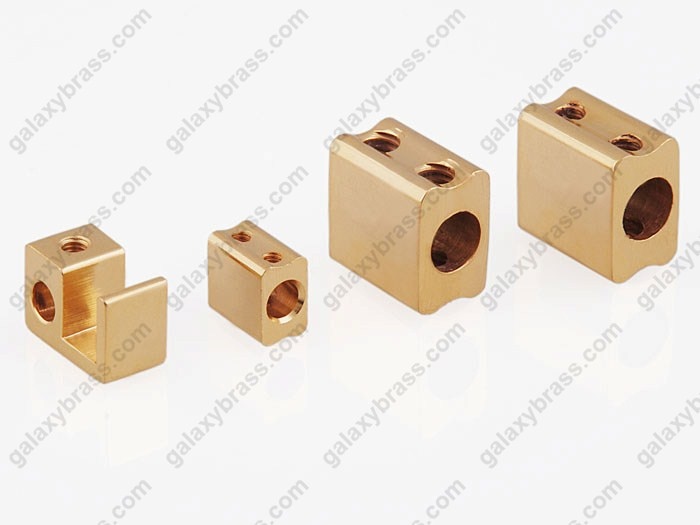 | Brass Electrical Contacts Specification: Available from 5 amp to 650 amp Material : Free Cutting Brass Is 319 Type (I) Or Free Cutting Brass As Per Bs 249 Type (I) Or High... View product → |
Frequently asked questions
How can you build a short supplier list for brass parts in Jamnagar?
Separate material suppliers from process suppliers, then shortlist vendors that match your required machining, heading, stamping, plating or assembly work.
What should a quote-ready drawing for brass CNC parts include?
Include part dimensions, tolerances, threads, datum references, alloy, surface finish, quantities, inspection points and any applicable standard.
Why must mechanical fit and electrical performance be checked together?
A part can meet its dimensional requirements yet fail through poor contact pressure, excessive resistance, unsuitable plating or inadequate current-carrying area.
What supplier evidence should you compare before placing an order?
Compare available machine capacity, tooling ownership, inspection records, production lead times, material traceability and examples of completed deliveries.
Related products
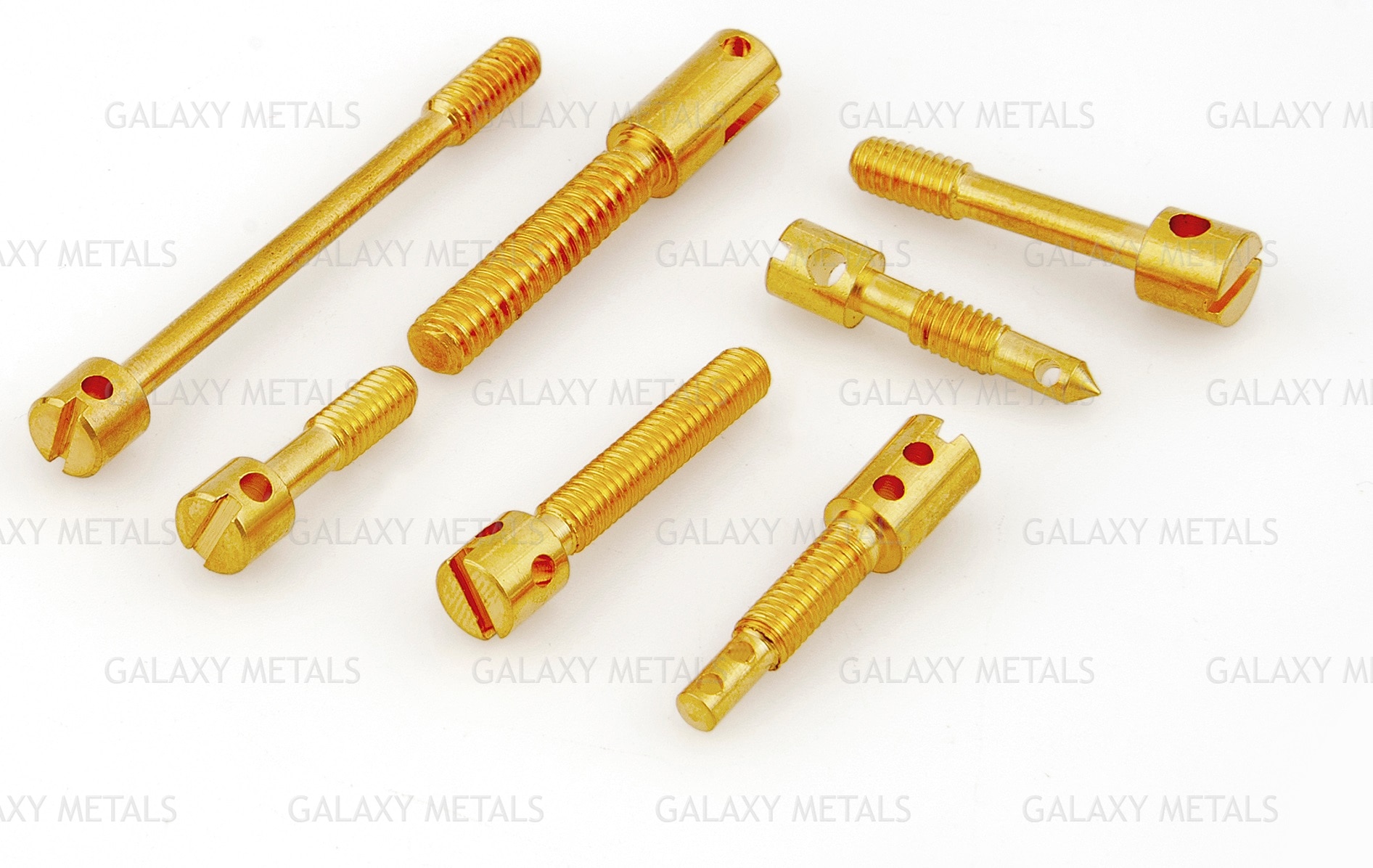 | Brass Energy Meter Parts Galaxy Metals is primary player and exporter of the optimum grade Brass Energy Meter Parts, which are massive, used in various industries and... View product → |
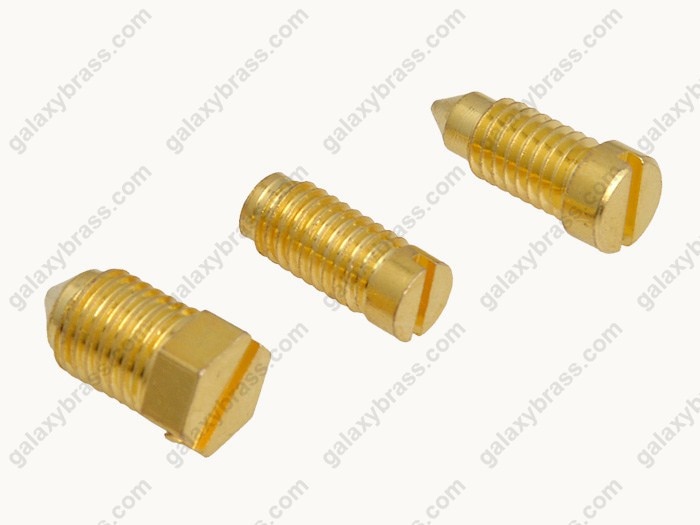 | Brass Hex Screw & Lock Screw We manufacture Brass Screw in various sizes & dimensions like: brass Screw, brass grub Screw, M4 brass Screw, brass Hex Screw, brass Screw... View product → |
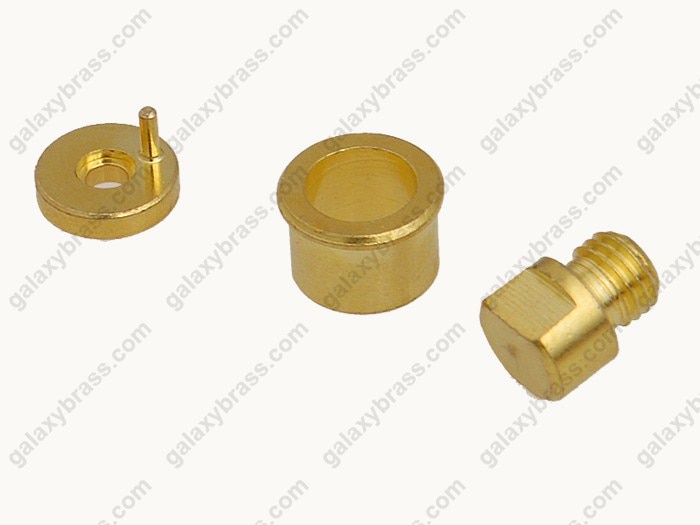 | Brass Bush Export quality brass bushes manufactured under team of highly professional experts in the Industry. View product → |
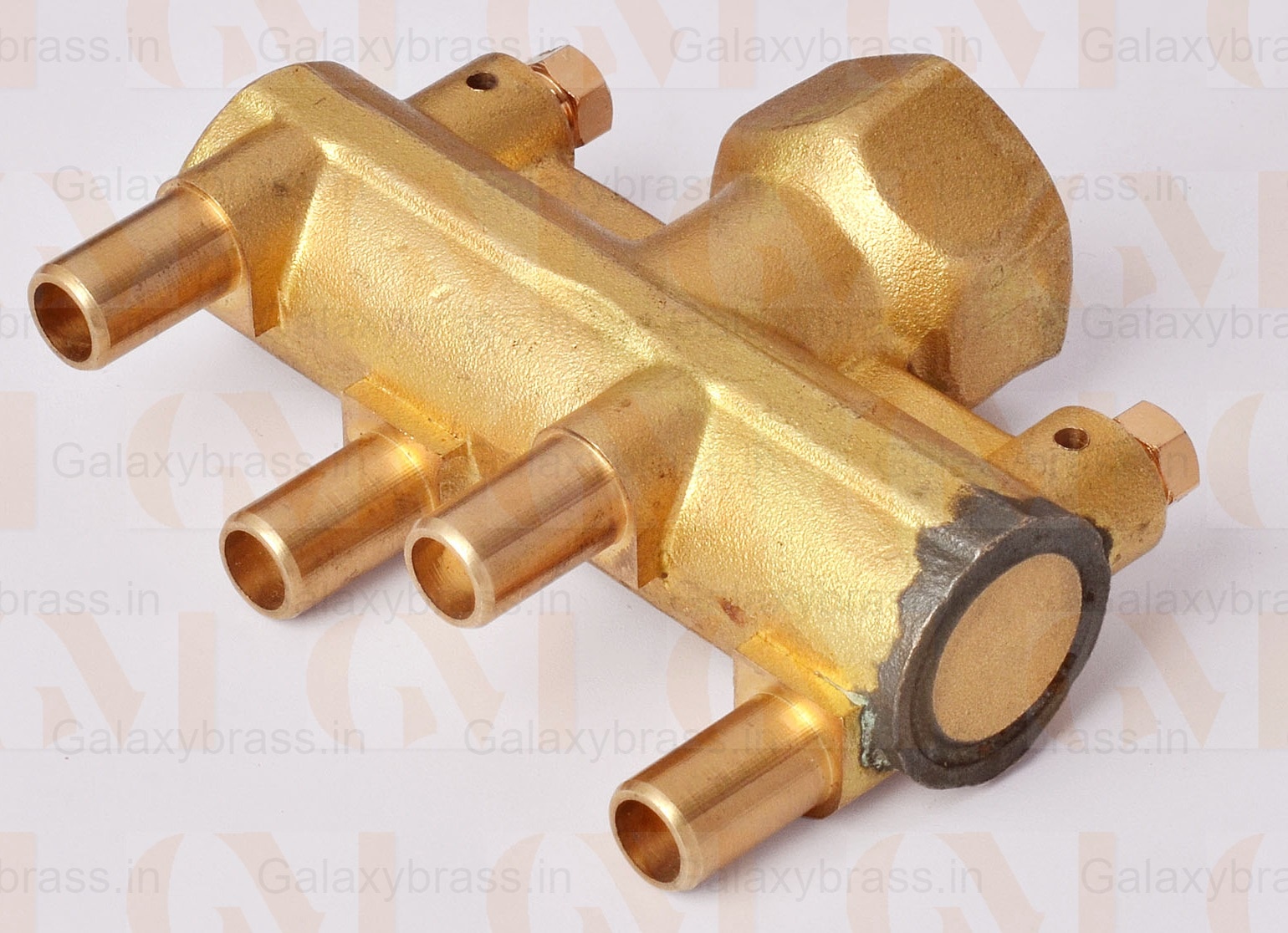 | Brass Forging Parts We Manufactures Brass Forgings Parts for various Industries, These Products are supplied regularly to the National and International Customers, We... View product → |
Keywords